Whether you've got a single day before a road trip or a long weekend, Reykjavík rewards the time you give it. The centre is compact enough to cover on foot, yet surprisingly varied — grand churches, a lively harbour, world-class museums, and a geothermal bathing culture unlike anywhere else. Here's how to make the most of it.
Top sights you shouldn't miss
Hallgrímskirkja
The soaring, rocket-shaped church that defines Reykjavík's skyline. Its design echoes Iceland's basalt lava columns, and the tower viewing deck gives the best panorama of the city's coloured rooftops and the mountains beyond — well worth the lift ticket.
Sun Voyager (Sólfar)
A gleaming steel sculpture on the waterfront, shaped like a Viking longship and pointing out to sea. One of the city's most photographed spots, especially at sunset and during the long golden hours of summer.
Harpa Concert Hall
A glittering glass-and-steel concert hall on the harbour, its honeycomb façade inspired by Icelandic basalt. Step inside — entry to the lobby is free — to see daylight play through the coloured glass panels, or catch a concert in the evening.
Perlan
A dome-topped museum and viewing platform built atop the city's geothermal hot-water tanks. Inside, the "Wonders of Iceland" exhibition includes a real walk-in ice cave, a planetarium, and an immersive northern lights show — an excellent rainy-day or family option. The 360° observation deck gives one of the best free views in the city.
The Old Harbour
The heart of the city's seafaring history, lined with excellent seafood restaurants and the departure point for whale-watching and puffin tours from April through October. A lovely area to wander any time of year.
Laugavegur
Reykjavík's main shopping and social street, threading through the old town with boutiques, design shops, bookstores, bars and bakeries. The surrounding streets are dotted with colourful murals and lively street art.
Best experiences in Reykjavík
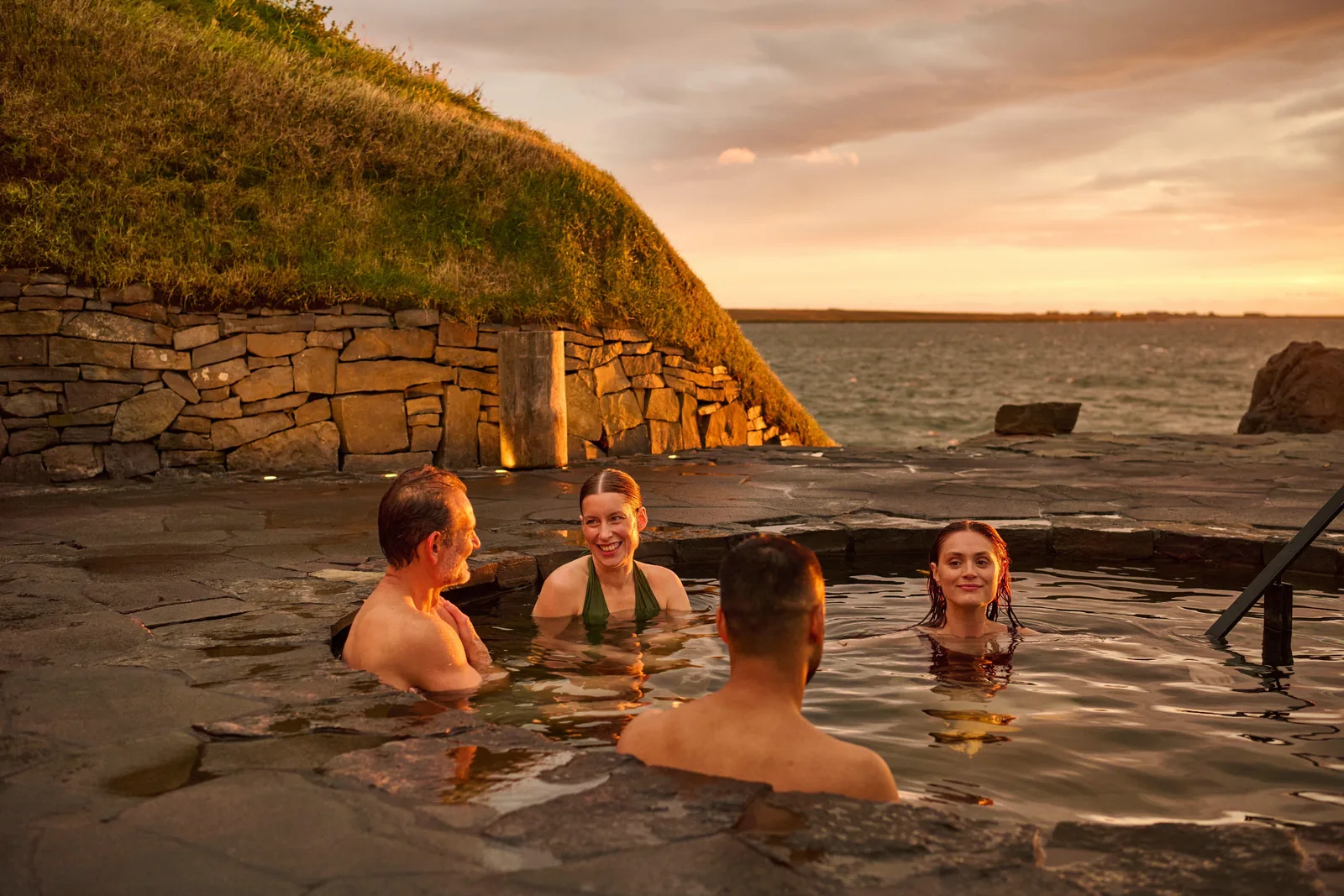
- Soak in a geothermal pool or lagoon. Bathing is the heartbeat of Icelandic culture. Reykjavík has options at every price point — from a local public pool like Laugardalslaug to the oceanfront Sky Lagoon — its seven-step Skjól ritual is one of the city's standout experiences. It's only 13 minutes from the centre. (See our complete Sky Lagoon guide.)
- Go whale watching. Tours from the Old Harbour regularly spot minke whales, humpbacks, dolphins and porpoises. Best from April through October; year-round departures available.
- Eat your way around. Try Icelandic lamb, fresh seafood, skyr desserts, and the famous pylsur (hot dog) from Bæjarins Beztu. The New Nordic food scene is also genuinely excellent.
- Visit the museums. The National Museum of Iceland, the Settlement Exhibition (Viking-era ruins beneath the streets), the quirky Whales of Iceland, and the Reykjavík Art Museum all reward a few hours.
- Hunt the northern lights. In winter, head just out of the city or watch from a dark oceanfront spot. (See our guide to the best time for northern lights in Iceland.)
- Bar-hop the rúntur. Reykjavík's nightlife is legendary; the bars get going late and stay lively, especially on weekends.
A perfect one day in Reykjavík
Short on time? This loop covers the highlights on foot, with a soak to finish:
- Morning: Start at Hallgrímskirkja and ride up the tower for the panoramic view. Walk down Skólavörðustígur (the rainbow street) toward the centre.
- Midday: Explore Laugavegur, grab lunch at one of the street's cafés, and stroll to the waterfront for the Sun Voyager and Harpa.
- Afternoon: Wander the Old Harbour, or head to Perlan for the ice cave and 360° views. Add a whale-watching tour here if you have time.
- Evening: Head to Sky Lagoon for an oceanfront soak and the seven-step ritual — the ideal way to end a day on your feet. (About 13 minutes from the centre; see how to get there.)
- Night: Dinner in the old town, then either an aurora hunt in winter or a taste of the city's nightlife.
Reykjavík as a base for day trips
Half of Reykjavík's appeal is how easily you can reach Iceland's wonders from it. Within a single day, you can do:
- The Golden Circle — Þingvellir National Park, the Geysir hot springs and Gullfoss waterfall, often finished with a Sky Lagoon soak back in the city.
- The South Coast — Seljalandsfoss and Skógafoss waterfalls, the black-sand beach at Reynisfjara, and (in winter) ice caves.
- The Blue Lagoon or Sky Lagoon for a dedicated geothermal bathing day. (Comparing both? Read our Sky Lagoon vs Blue Lagoon guide.)
- Whale watching, snorkelling in Silfra fissure, glacier hikes, lava tunnel tours, and more — most depart from the capital.
Most travellers split their time between the city itself and one or two of these excursions.
When to visit
- Summer (Jun–Aug): Endless daylight (the midnight sun), festivals and the warmest, easiest conditions — but peak prices and the biggest crowds.
- Winter (Nov–Mar): Cosy, atmospheric, and the season for northern lights, Christmas markets and dramatic frozen landscapes.
- Shoulder (May, Sep): A sweet spot — fewer crowds, decent weather, and (in September) the start of aurora season with good chances of seeing the lights.
Practical tips
- It's walkable. The centre is compact; most sights are within easy strolling distance of each other.
- Cards everywhere. Iceland is nearly cashless — a card is all you need, no need to carry krónur.
- Dress in layers. The weather changes fast in any season; waterproofs are a good idea year-round.
- Tap water is excellent. Don't buy bottled — the cold tap water is some of the purest anywhere on earth.
- Book lagoons and tours ahead in high season and for popular evening slots — Sky Lagoon timed entries and whale-watching tours both sell out.